
October 25, 2026 | LightndNow News Desk | Agriculture & Technology
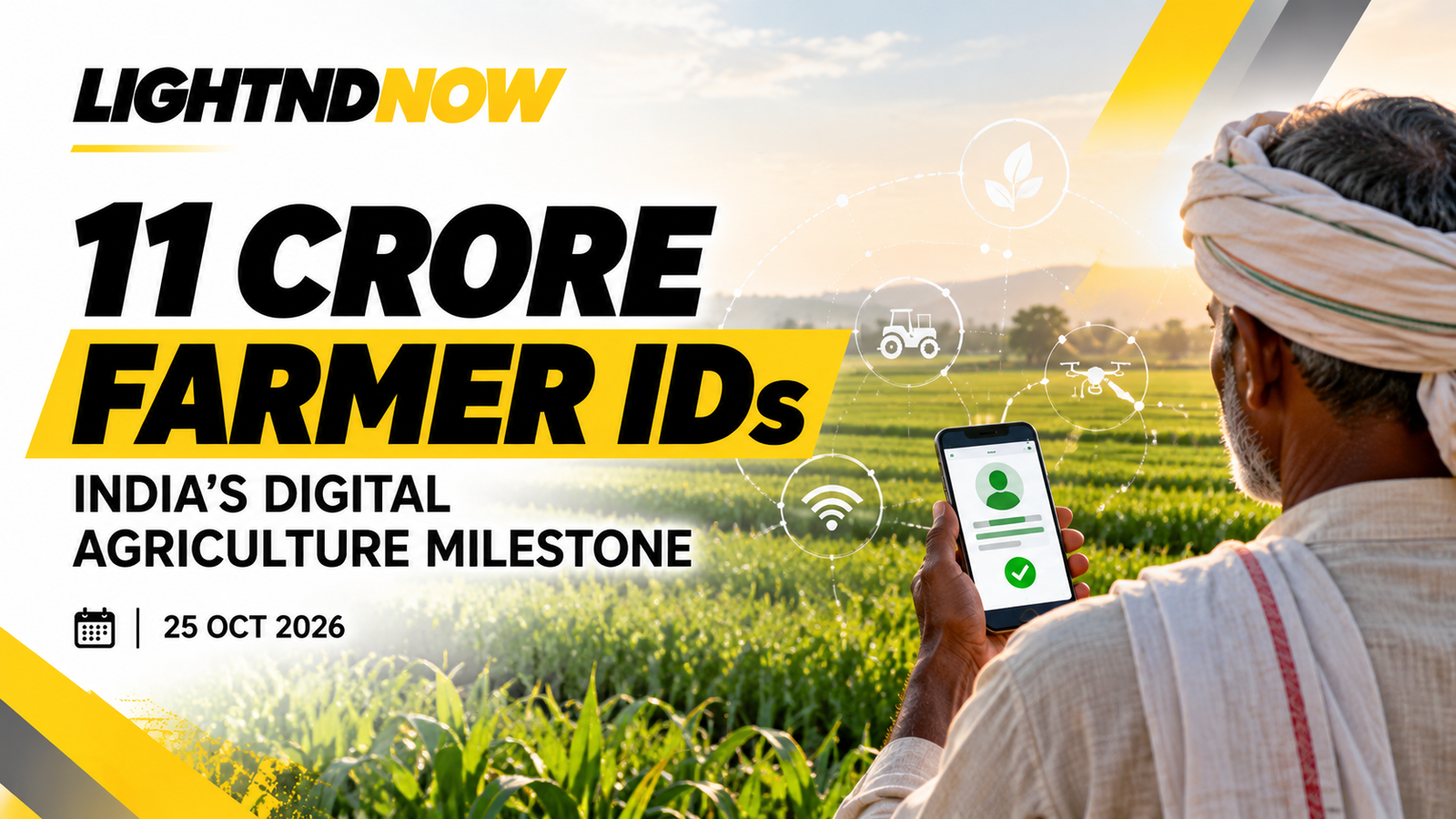
New Delhi: India has created 11 crore unique digital identities for farmers, achieving a major government target approximately five months before its March 31, 2027 deadline.
Union Agriculture Minister Shivraj Singh Chouhan announced the achievement on October 24, confirming that the milestone was reached on the night of October 23 under the Digital Agriculture Mission.
The initiative is designed to simplify farmers’ access to financial assistance, agricultural services and government welfare programmes.
What Is a Farmer ID?
A Farmer ID is a unique digital identification number created under AgriStack, a major component of India’s Digital Agriculture Mission.
It is intended to connect verified information about farmers with agricultural services and government benefit systems.
The government aims to use these identities to reduce repeated documentation, improve transparency and simplify access to important services.
How Will Farmers Benefit?
According to the Ministry of Agriculture and Farmers’ Welfare, the system is designed to help farmers in several ways.
Easier access to government schemes: Farmers could face fewer administrative hurdles when applying for eligible agricultural welfare programmes.
Simplified agricultural loans: Verified digital identities are intended to support access to institutional credit and Kisan Credit Card services.
Crop insurance and disaster relief: The system aims to make beneficiary identification and verification more efficient.
Reduced paperwork: Farmers may no longer need to repeatedly submit the same documents across different government services.
However, possessing a Farmer ID does not automatically guarantee approval for a loan, insurance payment or government benefit. Existing eligibility requirements still apply.
A Major Step Toward Digital Agriculture
The Digital Agriculture Mission received government approval in September 2024. Its AgriStack framework includes the Farmers’ Registry, geo-referenced village maps and a crop-sown registry.
Together, these systems aim to create a more connected agricultural information infrastructure.
The government also sees opportunities to combine verified agricultural data with artificial intelligence, satellite imagery and weather information to improve advisory services, crop monitoring and disaster preparedness.
Who Is Included?
According to reporting by The Indian Express, women account for approximately 26% of registered farmers, while about 81% are small or marginal farmers.
Efforts are also underway to include tenant farmers, sharecroppers and other eligible cultivators who may not directly own the land they farm.
Ensuring that such farmers are included will be important to the programme’s long-term effectiveness.
Challenges Ahead
While the milestone represents progress in creating digital identities, the success of the initiative will ultimately depend on how effectively farmers can use them.
Accurate records, accessible registration procedures, privacy protections and reliable service delivery will all be important.
Particular attention will be needed for farmers with limited digital access and those whose cultivation arrangements are not fully reflected in land-ownership records.
Conclusion
The creation of 11 crore Farmer IDs represents an important step in India’s ongoing efforts to modernise agricultural administration.
By reducing paperwork and improving the systems used to identify beneficiaries, the programme could help make agricultural services more accessible.
The next challenge will be translating this large-scale digital infrastructure into measurable improvements in farmers’ everyday lives.
LightndNow — Stay Informed. Stay Ahead.